Planning flooring installation in Suwanee, GA? Before you pick a style, think about the weather. Georgia’s hot, sticky summers and heavy rain put real stress on floors, and some materials handle that better than others. The wrong choice can lead to warped boards, gaps, and musty smells within a few seasons. This guide explains how Georgia’s climate affects flooring, which materials hold up best, and what to ask before your installer starts work.
How Does Georgia’s Climate Affect Your Floors?
Georgia’s hot, humid summers and heavy rainfall add moisture to your home’s air and subfloor. Wood and other porous materials absorb that moisture and swell, while dry winter air can shrink them again. Over time, these swings cause cupping, gaps, warping, and mold, so material choice matters.
Suwanee sits in metro Atlanta’s humid subtropical climate. Summers are hot and sticky, storms roll through often, and the area gets roughly 50 inches of rain a year. That moisture enters your home through the air, the crawlspace, or the concrete slab. Air conditioning removes some of it, but humidity can still climb in closets, basements, and rooms that stay shut.
Winter brings the opposite problem. When your heating runs, indoor air dries out, and wood floors shrink. This yearly cycle of swelling and shrinking is why some floors show cupping in July and small gaps in January. Georgia floors need to handle both extremes, not just one.
Tip: Buy an inexpensive hygrometer and place it in the room you plan to floor. The National Wood Flooring Association recommends keeping indoor humidity between 30% and 50% for wood floors. A week of readings shows you whether your home needs a dehumidifier before installation.
Which Flooring Handles Georgia Humidity Best?
Luxury vinyl plank and porcelain tile handle Georgia humidity best because water and moisture barely affect them. Engineered hardwood is the best wood option since its layered core stays more stable than solid planks. Solid hardwood, laminate, and carpet can work, but they need more moisture control.
Here is how the most popular options perform in a humid climate:
- Luxury vinyl plank (LVP): Waterproof or highly water-resistant and stable in humidity. A strong pick for kitchens, bathrooms, and basements.
- Porcelain tile: Unaffected by moisture and extremely durable. Ideal for entryways, bathrooms, laundry rooms, and sunrooms.
- Engineered hardwood: A real wood surface over a layered core that resists swelling better than solid planks.
- Solid hardwood: Beautiful and refinishable, but it moves with humidity and needs steady indoor conditions.
- Laminate: Budget-friendly, but choose a water-resistant product, because standard planks can swell when wet.
- Carpet: Cozy in air-conditioned bedrooms, but it can hold moisture and pollen in damp areas.
Match the material to the room, not just the house. For example, you might choose engineered hardwood for the living room, porcelain tile for a muddy-shoe mudroom, and luxury vinyl plank for a finished basement. Each material then works where it performs best. If a room has a history of dampness, start with a waterproof option like LVP or porcelain tile, and avoid solid wood.
Is Hardwood a Good Choice for Flooring Installation in Suwanee, GA?
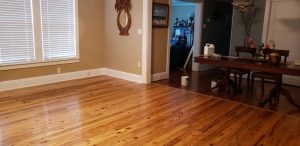
Yes, hardwood works well in Suwanee homes when it’s installed above ground and the indoor humidity stays steady. Engineered hardwood is usually the safer pick, especially over concrete slabs. Solid hardwood is best for main-level rooms with reliable air conditioning, not basements or damp spaces.
Hardwood is a popular choice for good reason: it adds warmth and character, and it can last for decades. The key is stability. Wood absorbs and releases moisture, so boards swell in humid months and shrink in dry ones. Small seasonal gaps are normal. Cupping, where board edges rise, signals a moisture problem that needs attention.
Tip: Choose engineered hardwood if your home sits on a concrete slab or has a finished basement. Its layered core moves less than solid planks, and many products can be glued down or floated over a slab. Always confirm the manufacturer’s rating for your subfloor type before you buy.
Does Georgia’s Climate Change How Floors Should Be Installed?
Yes. In Georgia, a proper installation includes checking moisture in the subfloor or slab, letting materials acclimate to your home, and using the right underlayment or vapor barrier. Skipping these steps is a common reason floors buckle, gap, or fail early in humid climates.
A careful installer follows steps like these:
- Test the subfloor or slab for moisture. Concrete slabs can release moisture vapor even when they look dry.
- Acclimate the flooring. Let the material sit in the room, as the manufacturer directs, until it matches your home’s conditions.
- Run the HVAC first. Install only when your air conditioning or heat is running at normal levels, so the home sits at everyday temperature and humidity.
- Add a vapor barrier or underlayment when needed. This helps block moisture rising from crawlspaces and slabs.
- Leave expansion gaps. Floors need room to move at the walls, and baseboards or trim cover the space.
Ask every installer how they handle these steps before you sign a contract. A clear answer is a good sign. A vague answer, or a quote that skips moisture testing, is a red flag, because moisture problems are much cheaper to prevent than to fix after the floor is down.
How Can You Protect Floors in a Humid Georgia Home?
Keep indoor humidity between 30% and 50%, run your air conditioning in summer, and use a dehumidifier in damp spaces. Wipe up spills quickly, use entry mats during rainy weather, and keep gutters clear so water drains away from your foundation. Steady conditions protect every flooring type.
These habits make the biggest difference:
- Run your AC through summer. Even when you travel, set it to a steady, moderate level instead of switching it off.
- Use a dehumidifier in basements, laundry rooms, and any space that feels damp. The U.S. Environmental Protection Agency suggests keeping indoor humidity below 60%, and ideally between 30% and 50%.
- Clean up spills fast, and place mats at doors during rainy weather.
- Manage water outside. Clear gutters and slope soil away from your foundation.
- Check the crawlspace once a year for standing water or damp insulation.
Contact a flooring professional if you notice cupped or crowned boards, lifting corners, a musty smell, or dark stains along the seams. Early action usually keeps a small moisture issue from spreading to the subfloor. Also fix the source of the moisture first. Replacing or refinishing a floor will not help if a leak or damp crawlspace is still feeding the problem.
Georgia Flooring FAQs
Can I install hardwood floors in a Georgia basement?
Solid hardwood is not recommended below ground level because basements hold more moisture. Some engineered hardwood products are rated for below-grade use, but luxury vinyl plank or porcelain tile is usually the safer choice. Always run a moisture test and follow the manufacturer’s instructions before installing anything in a basement.
Is a luxury vinyl plank a good choice for Georgia’s humidity?
Yes. Most luxury vinyl plank resists moisture and humidity well, which makes it popular for Georgia homes. It still has limits. Standing water can seep through seams, and direct afternoon sun through large windows can heat the planks and make them expand. Use blinds or window film in sunny rooms and follow the manufacturer’s installation guide.
Why are my hardwood floors cupping?
Cupping usually means the bottom of the boards holds more moisture than the top. Common causes include high indoor humidity, plumbing leaks, and damp crawlspaces or slabs. Find and fix the moisture source first. Some floors flatten again once they dry, so avoid sanding right away, because refinishing a cupped floor too early can cause new problems.
How long should flooring acclimate before installation?
It depends on the material and the manufacturer. Many vinyl products need 24 to 48 hours, while hardwood often needs several days or longer until it matches your home’s moisture level. Keep your air conditioning or heat running at normal settings during that time, and follow the written instructions that come with your flooring.
Is carpet a bad idea in Georgia’s humidity?
Not always. Carpet works well in air-conditioned bedrooms where humidity stays steady. It is a poor fit for basements, laundry rooms, and other damp spaces, where it can hold moisture and grow mildew. Georgia’s heavy spring pollen also settles into carpet, so plan on regular vacuuming with a HEPA filter.
Choose Floors That Fit Georgia’s Climate
Georgia’s humidity, heat, and heavy rain should shape every flooring decision. Luxury vinyl plank and porcelain tile handle moisture best, engineered hardwood offers a stable wood look, and solid hardwood and carpet work when conditions stay controlled. Proper moisture testing, acclimation, and installation matter just as much as the material you choose. If you want flooring installation in Suwanee, GA that stands up to our weather, Alpharetta Floors can help you match the right material to every room. Contact us today to request a quote.